Category: Obedience & Manners

Sit, stay, place, recall, door manners

  • Frustration Barriers: Why Your Dog Pulls, Lunges, and Gets Wound Up

    Frustration Barriers: Why Your Dog Pulls, Lunges, and Gets Wound Up

    I’ve seen dog barrier frustration play out hundreds of times over the last forty years. A dog hits the end of the leash, starts choking itself, or explodes at another dog, a person, or a passing car. The owner looks at me and says, “He’s just stubborn,” or “She’s being difficult on purpose.”

    Almost never true.

    What’s usually happening is a simple mix of two natural things: the opposition reflex and rising frustration. Together they create classic dog barrier frustration.

    The Opposition Reflex Is Hard-Wired

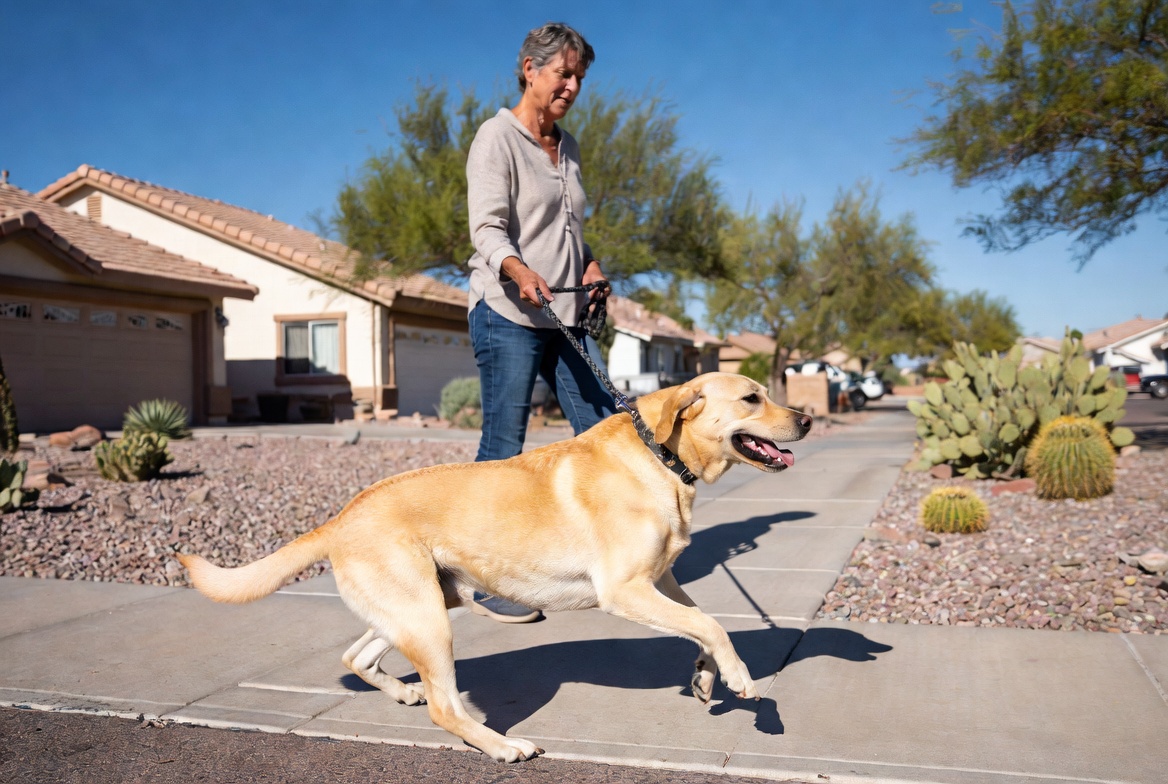
    Dogs resist pressure. Hold them back, and they pull forward. Try to drag them along, and they dig in. Push one way, and they lean the other. A tight leash flips this switch every single time. The tighter the leash gets, the harder most dogs pull. It’s not attitude. It’s automatic.

    I first really paid attention to this years ago while working with a big Lab mix in the Bay Area. The owner was a strong guy, but the dog was stronger. Every walk turned into a tug-of-war. We tried the usual “corrections.” Nothing stuck. Then one afternoon I simply kept the leash loose and made a series of calm about-turns the second the dog started to lean. Within ten minutes the pulling dropped dramatically. The dog wasn’t fighting me anymore because there was nothing left to fight against. That lesson stuck with me.

    How Frustration Turns Into Dog Barrier Frustration

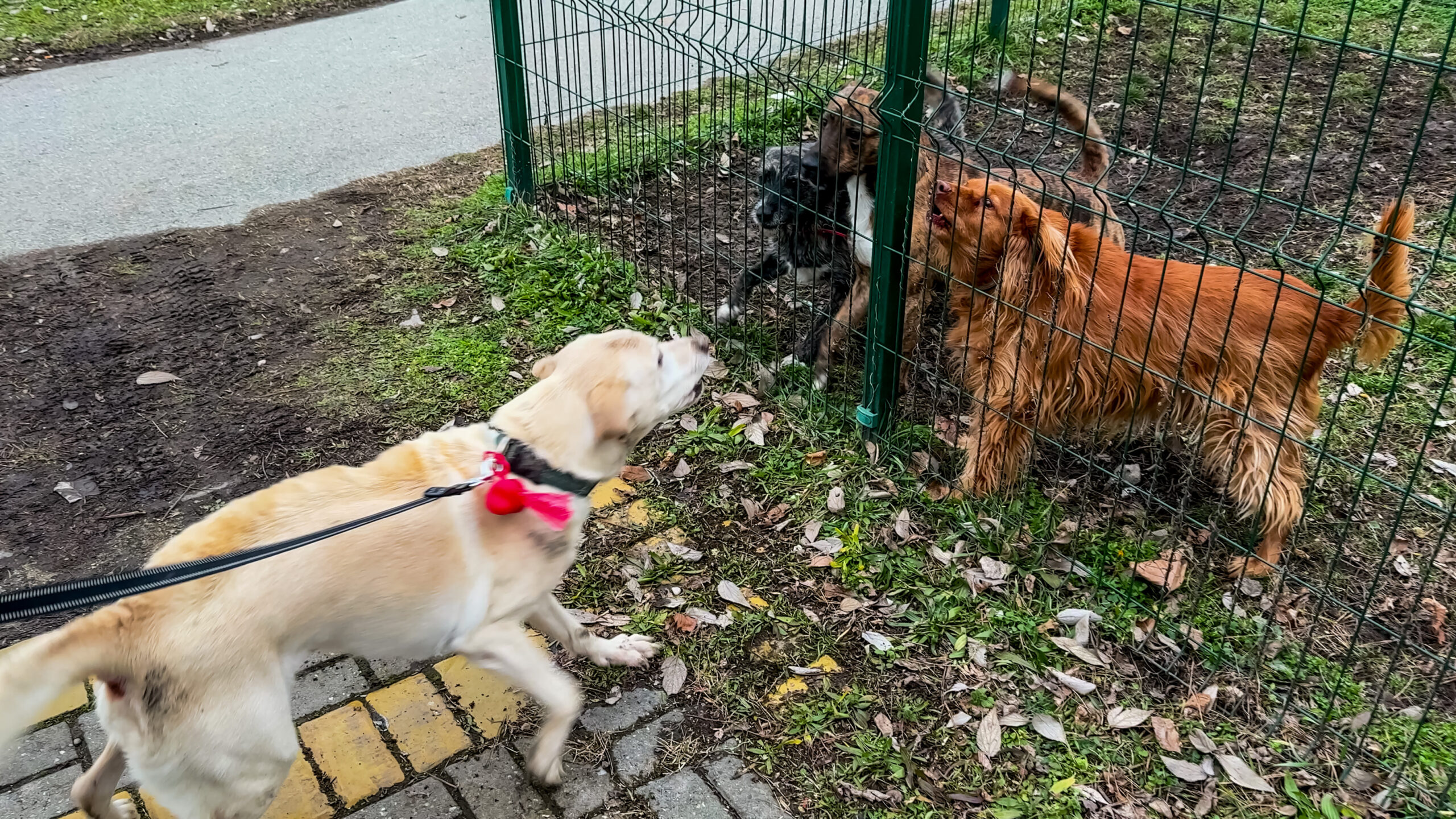
    Your dog sees something it wants—another dog, a squirrel, a person, a car—and the leash, fence, or gate stops it. Frustration climbs fast. Dogs rarely understand that the restriction itself is the problem. They lock onto whatever they’re looking at and decide that is causing the feeling. This is the heart of dog barrier frustration.

    I still remember a young German Shepherd I worked with in Kingman whose owners had a chain-link fence along a busy sidewalk. Every time someone walked past with another dog, their Shepherd raced the fence line, barking and spinning. By the time I got there the dog had already practiced that behavior so many times that simple excitement had turned into full barrier aggression. We interrupted the fence-running, changed the daily routine, and gave the dog better outlets. The change wasn’t magic—it was just stopping the rehearsal of dog barrier frustration.

    That’s the cycle I see over and over: Dog sees the trigger → wants to get there → gets blocked → frustration builds → redirects the frustration at the trigger → lunges, barks, or growls.

    What started as normal interest becomes leash reactivity or fence aggression if you keep letting it practice.

    How to Stop Dog Barrier Frustration on Walks

    On walks, keep the leash loose whenever you can. A loose leash removes the opposition reflex and drops a lot of the tension before it starts. Praise calm walking beside you with a clear, positive tone. The second your dog begins to pull—before the leash goes tight—make a right about-turn and take at least three solid steps in the new direction. Then keep going. This interrupts the pull without turning the walk into a fight.

    I use this exact approach with my own dogs. Willow, my Lab, still gets excited when she spots something interesting. The moment that lean starts, we change direction. She doesn’t get the chance to load up with frustration, and the walks stay calm.

    Managing Dog Barrier Frustration at Home and in the Yard

    At home or in the yard, do not allow repeated fence-running every time someone or another dog goes by. That constant overstimulation feeds the same cycle and often hardens into barrier aggression. Interrupt the fence-racing early. Redirect to something calmer or bring the dog inside. Give the dog regular mental and physical outlets through structured training so everyday triggers don’t send it over the top.

    This is the practical work we do every week in leash walking training and when we sort out behavior problems. It’s also a core piece of Canine Environmental Management—changing the setup and the daily patterns so calm behavior becomes the easier choice instead of fighting the same problems over and over.

    The Real Point About Dog Barrier Frustration

    A tight leash or a barrier doesn’t just limit movement. It creates dog barrier frustration that your dog then misattributes to the very thing it wants to reach. Manage the environment and keep the leash loose, and you cut that frustration off before it grows into bigger issues.

    Understanding how your dog experiences restriction is one of the simplest and most effective ways to make walks safer and life at home quieter. If your dog is already showing the early signs—or the full version—of leash reactivity or fence frustration, we can help through private in-home sessions or a more structured program. You can see the full range of options on the services page or reach out directly.

    For more on building the kind of leadership and daily structure that prevents these problems in the first place, take a look at related pieces on Dog Sense For Your Life at dogsenseforyourlife.com. The principles are the same: clear communication, consistent management, and working with the dog’s instincts instead of against them.

    Real change starts when you stop treating the symptom and start addressing the root.
  • Socializing Your Dog the Right Way

    Socializing Your Dog the Right Way

    You’re out walking, and another dog appears. Your dog lunges, barks, or tries to hide. A stranger reaches to pet them, and your dog backs away or stiffens. These reactions are common, and they often stem from how socialization was handled — or wasn’t handled at all.

    True socialization isn’t about exposing your dog to as many things as possible. It’s about helping them learn that the world is manageable, that they can stay calm, and that they can look to you for guidance when things feel new or exciting.

    Done well, socialization builds confident dogs who handle everyday life without constant stress. Done poorly or skipped, it often leads to reactivity, fear, or shutdown behaviors that make walks and outings difficult.

    Here’s what effective socialization actually involves:

    Controlled, gradual exposure. Start at a level your dog can handle successfully. Increase difficulty slowly — more distance first, then closer; shorter sessions that end on a good note. The goal is for the dog to learn “this is okay” rather than being flooded with too much at once.

    Pay attention to body language. Learn to read the early signals: lip licking, yawning, tucked tail, stiff posture, whale eye. These tell you when your dog is reaching their limit. Respecting those signals prevents the creation of negative associations and builds trust.

    Strong leadership from you, Dogs do best when they trust their handler is in control. Calm, consistent energy and clear direction help lower your dog’s stress. When your dog looks to you in moments of uncertainty, it changes everything.

    Management and impulse control. Preventing unwanted rehearsals is key. Use distance, leashes, and structure to set your dog up for success as you teach better responses. Dogs with good impulse control and clear expectations handle social situations much more easily than those who rely on constant management or treats to get through them.

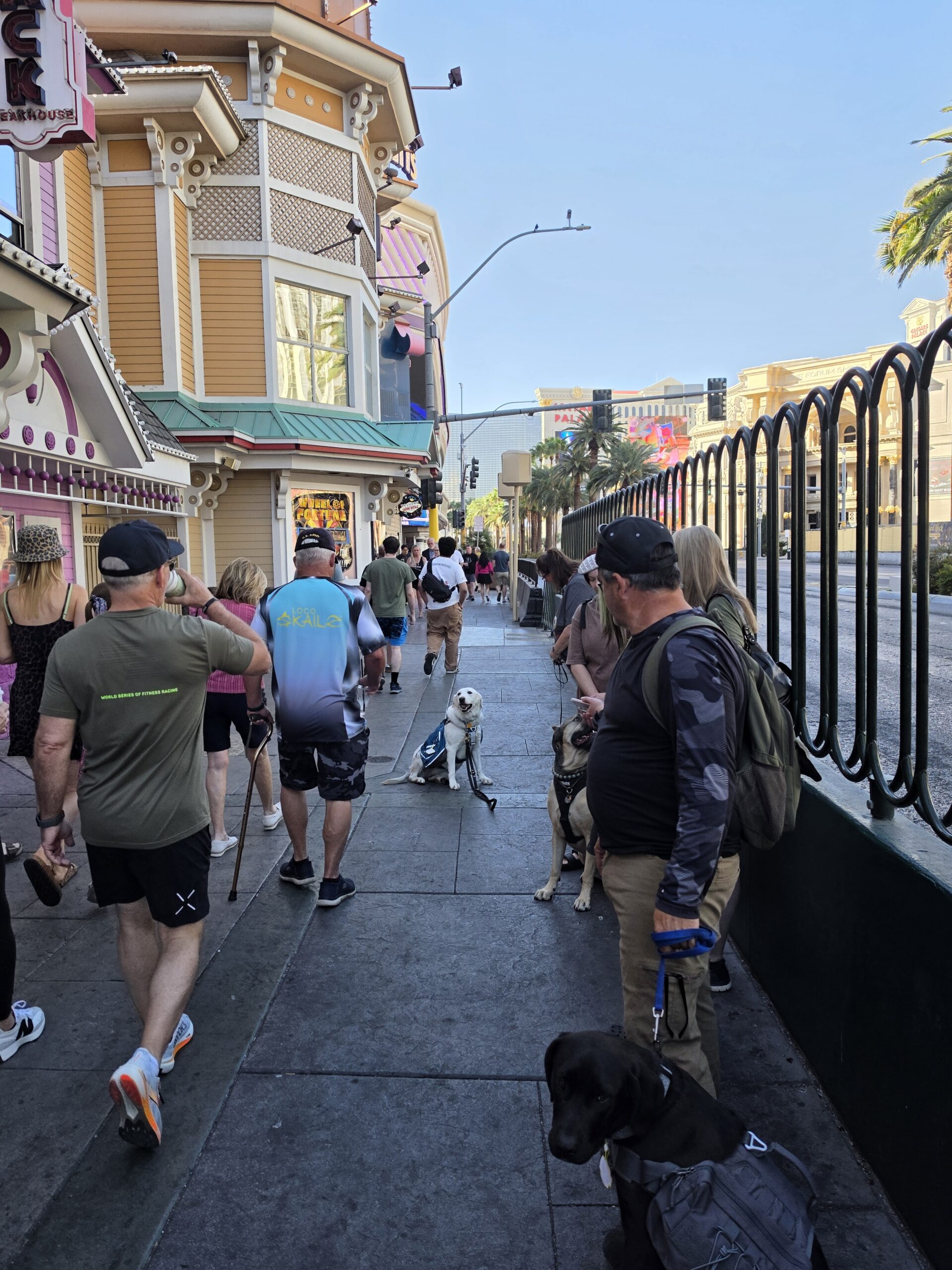
    Real-world practice in structured, safe, organized environments where dogs can practice focus and calm behavior around other dogs and people is incredibly valuable. This kind of controlled exposure builds real confidence that carries over into daily life.

    These principles work for puppies during their early developmental window and for adult dogs who need to build better coping skills. Many behavioral issues that appear later in life trace back to gaps in socialization or experiences that fostered fear rather than confidence. For a deeper look at why early structure matters, read The Power of Prevention in Puppy Training.

    The payoff is significant: calmer walks, less reactivity, easier vet and grooming visits, and a dog who enjoys life more instead of living in a constant state of alert or avoidance.

    If your dog struggles with other dogs, new people, or novel environments, our Socialization training, Drop-In Classes, and Private In-Home Sessions can help build confidence in a structured way. You can also contact K9 Advantage to talk through what your dog is struggling with.

  • Why Your Mindset Matters More Than Training Techniques

    Why Your Mindset Matters More Than Training Techniques

    When people ask me about dog training, they often want to know the best techniques or tools to use. While techniques matter, I’ve found that your mindset as an owner has a much bigger impact on your dog’s behavior than any specific method.

    Dogs are incredibly good at reading us. They notice when we’re inconsistent, unsure, or sending mixed signals. A dog doesn’t need perfect training methods — they need a leader who is calm, clear, and consistent.

    One of the biggest shifts I see in owners who get great results is when they stop viewing training as something they do to their dog and start seeing it as something they do with their dog. Training becomes part of daily life rather than a separate activity that only happens during formal sessions.

    Consistency is one of the most important parts of a strong owner mindset. Dogs thrive when they receive clear and consistent messages about what is expected of them. If jumping on people is okay sometimes but not others, your dog becomes confused. When the rules are the same every day — whether you’re tired, busy, or have company over — your dog learns faster and feels more secure.

    Another key part of the right mindset is taking responsibility for your dog’s environment. Many behavior issues aren’t really training problems — they’re management problems. If your dog is constantly practicing unwanted behaviors because they have too much freedom, no amount of training will fix it until the management improves. Good owners understand that they control the environment, and the environment shapes the dog.

    Patience and realistic expectations also matter. Dogs don’t learn through frustration or anger. When we stay calm even when our dog makes a mistake, we set a better example and create a safer learning environment. Progress takes time, especially with behavior problems that have been practiced for months or years.

    Finally, the best owners I work with understand that training is ongoing. It’s not something you finish after a few classes. It’s a lifestyle of clear communication, fair expectations, and continued leadership. The dogs that turn out the best usually have owners who are willing to keep showing up consistently, even when it’s inconvenient.

    Your dog is always learning — whether you’re actively training or not. The question is: what are they learning from you?

    When you adopt the mindset that you are responsible for setting your dog up for success through clear leadership and thoughtful management, everything else becomes easier. Techniques are helpful, but your mindset is what makes them work. If you want help applying that mindset at home, explore our Private In-Home Sessions or visit the full Services page.

  • Consistent Feeding: The Simple Structure That Builds a Calmer, More Focused Dog

    Consistent Feeding: The Simple Structure That Builds a Calmer, More Focused Dog

    Picture this: Your dog starts pacing, whining, or staring you down 20–30 minutes before “dinner time” — except dinner time changes every day depending on your schedule. Or the bowl sits out all day and your dog grazes whenever they feel like it, leading to constant begging, unpredictable potty habits, or even tension when you walk near the bowl.

    This isn’t just “how your dog is.” It’s the direct result of inconsistent feeding — and it’s one of the easiest, highest-impact changes you can make.

    At K9 Advantage, we teach that dogs are products of their environment — and you control that environment. Consistent feeding is one of the most powerful ways to give your dog the structure, predictability, and calm leadership they need to thrive.

    Why Consistent Feeding Matters More Than Most Owners Realize

    Dogs are creatures of habit. When meals arrive at the same times every single day, several powerful things happen:

    • Predictability lowers stress. Uncertainty creates anxiety. A dog who knows exactly when food is coming relaxes. That calm baseline carries into walks, training, and daily life.
    • It supercharges house training and potty reliability. When you control when food goes in, you know when it needs to come out. Puppies and adult dogs alike become far more predictable — and accidents drop dramatically.
    • Digestion and overall health improve. Irregular meals can contribute to upset stomachs, poor nutrient absorption, and even increase bloat risk in some breeds. Consistent timing helps regulate the entire digestive system.
    • Weight management becomes simple. Free-feeding or grazing almost always leads to overeating. Scheduled, measured meals let you control portions and keep your dog at a healthy weight.
    • Impulse control and leadership are built at every meal. Mealtime stops being a free-for-all and becomes a structured interaction. Your dog learns to wait calmly, look to you, and earn their meal through composure. This is “Learn to Earn” in its simplest, most practical form — no treats required.

    When you control the when, where, and how of feeding, you’re not just feeding your dog. You’re training them.

    How to Implement Consistent Feeding (The Right Way)

    1. Pick two set times and protect them. For most adult dogs, morning and evening at the exact same times — weekends included. Your dog’s internal clock will adjust quickly, and so will their behavior.
    2. Use the same location every time. Same spot, same bowl, same setup. This builds ritual and reduces excitement or guarding that can appear when everything changes.
    3. Create a calm pre-meal ritual. Before the bowl goes down, have your dog sit or wait in a composed state (whatever matches their current level). Only release them to eat when they’re calm. This single habit teaches patience and reinforces that you control the resources.
    4. Measure every meal. Use a cup or scale. Eyeballing leads to inconsistency in calories and weight. Adjust portions based on your dog’s age, activity level, and your vet’s guidance — but keep the process consistent.
    5. No free-feeding or leaving food out. Pick up the bowl after 10–15 minutes if it’s not finished. Grazing removes structure and often creates picky eaters or constant “I’m hungry” behaviors.
    6. Link it to potty time. Right after eating, take your dog out. This creates a clean, repeatable chain: eat → potty → calm. It’s one of the simplest ways to accelerate house training.

    The Ripple Effect You’ll Notice

    Once consistent feeding is locked in, the benefits spread. Your dog becomes more focused during training. Walks feel calmer because the overall structure of their day is solid. Begging and pushy mealtime behaviors fade. Many owners also report that other reactivity or anxiety issues improve simply because the environment feels more predictable and safe under their leadership.

    This isn’t about being rigid. It’s about giving your dog what they actually need: clear expectations, reliable leadership, and a calm environment you create.

    Start Today

    Pick your two feeding times, commit to them this week, and watch what happens. You’ll be amazed how one simple, consistent habit shifts the entire tone of your relationship with your dog.

    This kind of practical, structure-first approach is the foundation of everything we teach at K9 Advantage — from our training services to Private In-Home Sessions and Board & Train.

    Your dog doesn’t need more chaos. They need a calm, consistent leader who controls the environment.

    You’ve got this. Start with the bowl — and the rest starts falling into place.

  • 5 Common Dog Behavior Problems Arizona Owners Can Start Fixing Today

    5 Common Dog Behavior Problems Arizona Owners Can Start Fixing Today

    Better Behavior Starts at Home

    Life with a dog should feel rewarding, not stressful. At K9 Advantage, we help Arizona dog owners address everyday behavior problems with practical training, clear communication, and strategies that create calmer homes and stronger bonds.

    Whether your dog pulls on the leash, jumps on guests, ignores cues, or struggles with overstimulation, progress often begins with a few consistent changes. Here are five common issues we see and what owners can do to start improving them. If you have a young dog, The Power of Prevention in Puppy Training explains how early structure can prevent many of these issues from taking hold.

    1. Pulling on the Leash

    Leash pulling turns walks into a battle and can make daily exercise frustrating. Dogs often pull because they have learned that tension still gets them where they want to go.

    • Reward your dog for walking near you before the leash gets tight.
    • Pause or change direction when pulling starts.
    • Keep sessions short so your dog can succeed.

    Consistent leash walking training helps dogs understand that calm movement earns forward progress.

    2. Jumping on Guests

    Jumping is often driven by excitement, but it can quickly become overwhelming for visitors and family members. The key is teaching an incompatible behavior your dog can perform instead.

    • Practice greetings before guests arrive.
    • Reward four paws on the floor or a sit.
    • Ask everyone to respond consistently so the dog gets a clear message.

    For dogs that struggle with visitors, our Guest Manners training gives owners a practical plan.

    3. Not Listening at Home

    Many owners say their dog knows commands but does not respond when it matters. In many cases, the issue is not stubbornness. It is a lack of reliable practice in real-life situations.

    Dogs learn best when expectations are clear, rewards are timely, and skills are practiced in the environments where they are actually needed.

    Obedience Training becomes more effective when owners build repetition into daily routines instead of only practicing during formal sessions.

    4. Overstimulation and Poor Household Manners

    Some dogs struggle not because they are unwilling, but because their environment makes success difficult. This is where Canine Environmental Management becomes especially valuable.

    • Use gates, crates, place beds, and structured routines to reduce chaos.
    • Set up the home so your dog can make better choices more easily.
    • Pair management with training so good habits become more reliable over time.

    Thoughtful management helps prevent rehearsal of unwanted behavior while giving both dogs and owners a clearer path forward.

    5. Behavior Problems That Keep Getting Worse

    Barking, reactivity, door rushing, and other persistent issues rarely improve by accident. Early support can make a major difference, especially when training is tailored to the dog, the home, and the owner’s goals.

    Private In-Home Sessions can uncover triggers, improve consistency, and create a realistic plan that fits everyday life in Arizona households.

    Why Owners Choose K9 Advantage

    K9 Advantage brings decades of experience helping dog owners solve behavior problems, improve obedience, and build stronger relationships with their dogs. Our approach is practical, supportive, and focused on results owners can use in real life.

    If you are ready for calmer walks, better manners, and more confidence at home, professional guidance can help you get there faster.

    Take the First Step

    K9 Advantage works with Arizona dog owners who want better behavior, clearer communication, and lasting progress. If your dog is struggling with obedience, guest manners, leash walking, or behavior challenges, now is a great time to start. Explore our full Services page or contact us to get started.