Skip to content
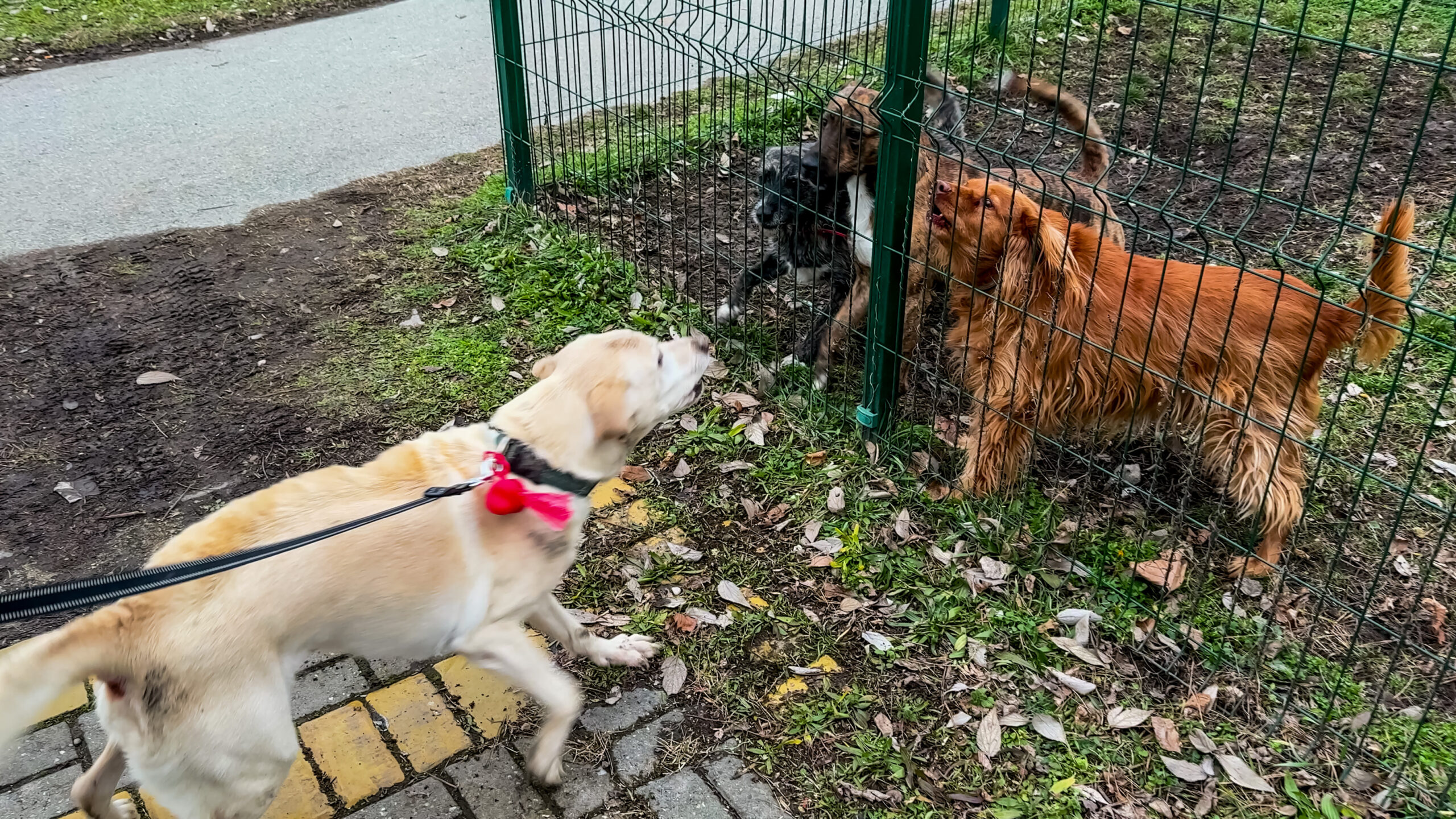
I’ve seen dog barrier frustration play out hundreds of times over the last forty years. A dog hits the end of the leash, starts choking itself, or explodes at another dog, a person, or a passing car. The owner looks at me and says, “He’s just stubborn,” or “She’s being difficult on purpose.”
Almost never true.
What’s usually happening is a simple mix of two natural things: the opposition reflex and rising frustration. Together they create classic dog barrier frustration.
The Opposition Reflex Is Hard-Wired
Dogs resist pressure. Hold them back, and they pull forward. Try to drag them along, and they dig in. Push one way, and they lean the other. A tight leash flips this switch every single time. The tighter the leash gets, the harder most dogs pull. It’s not attitude. It’s automatic.
I first really paid attention to this years ago while working with a big Lab mix in the Bay Area. The owner was a strong guy, but the dog was stronger. Every walk turned into a tug-of-war. We tried the usual “corrections.” Nothing stuck. Then one afternoon I simply kept the leash loose and made a series of calm about-turns the second the dog started to lean. Within ten minutes the pulling dropped dramatically. The dog wasn’t fighting me anymore because there was nothing left to fight against. That lesson stuck with me.
How Frustration Turns Into Dog Barrier Frustration
Your dog sees something it wants—another dog, a squirrel, a person, a car—and the leash, fence, or gate stops it. Frustration climbs fast. Dogs rarely understand that the restriction itself is the problem. They lock onto whatever they’re looking at and decide that is causing the feeling. This is the heart of dog barrier frustration.
I still remember a young German Shepherd I worked with in Kingman whose owners had a chain-link fence along a busy sidewalk. Every time someone walked past with another dog, their Shepherd raced the fence line, barking and spinning. By the time I got there the dog had already practiced that behavior so many times that simple excitement had turned into full barrier aggression. We interrupted the fence-running, changed the daily routine, and gave the dog better outlets. The change wasn’t magic—it was just stopping the rehearsal of dog barrier frustration.
That’s the cycle I see over and over: Dog sees the trigger → wants to get there → gets blocked → frustration builds → redirects the frustration at the trigger → lunges, barks, or growls.
What started as normal interest becomes leash reactivity or fence aggression if you keep letting it practice.
How to Stop Dog Barrier Frustration on Walks
On walks, keep the leash loose whenever you can. A loose leash removes the opposition reflex and drops a lot of the tension before it starts. Praise calm walking beside you with a clear, positive tone. The second your dog begins to pull—before the leash goes tight—make a right about-turn and take at least three solid steps in the new direction. Then keep going. This interrupts the pull without turning the walk into a fight.
I use this exact approach with my own dogs. Willow, my Lab, still gets excited when she spots something interesting. The moment that lean starts, we change direction. She doesn’t get the chance to load up with frustration, and the walks stay calm.
Managing Dog Barrier Frustration at Home and in the Yard
At home or in the yard, do not allow repeated fence-running every time someone or another dog goes by. That constant overstimulation feeds the same cycle and often hardens into barrier aggression. Interrupt the fence-racing early. Redirect to something calmer or bring the dog inside. Give the dog regular mental and physical outlets through structured training so everyday triggers don’t send it over the top.
This is the practical work we do every week in leash walking training and when we sort out behavior problems. It’s also a core piece of Canine Environmental Management—changing the setup and the daily patterns so calm behavior becomes the easier choice instead of fighting the same problems over and over.
The Real Point About Dog Barrier Frustration
A tight leash or a barrier doesn’t just limit movement. It creates dog barrier frustration that your dog then misattributes to the very thing it wants to reach. Manage the environment and keep the leash loose, and you cut that frustration off before it grows into bigger issues.
Understanding how your dog experiences restriction is one of the simplest and most effective ways to make walks safer and life at home quieter. If your dog is already showing the early signs—or the full version—of leash reactivity or fence frustration, we can help through private in-home sessions or a more structured program. You can see the full range of options on the services page or reach out directly.
For more on building the kind of leadership and daily structure that prevents these problems in the first place, take a look at related pieces on Dog Sense For Your Life at dogsenseforyourlife.com. The principles are the same: clear communication, consistent management, and working with the dog’s instincts instead of against them.
Real change starts when you stop treating the symptom and start addressing the root.